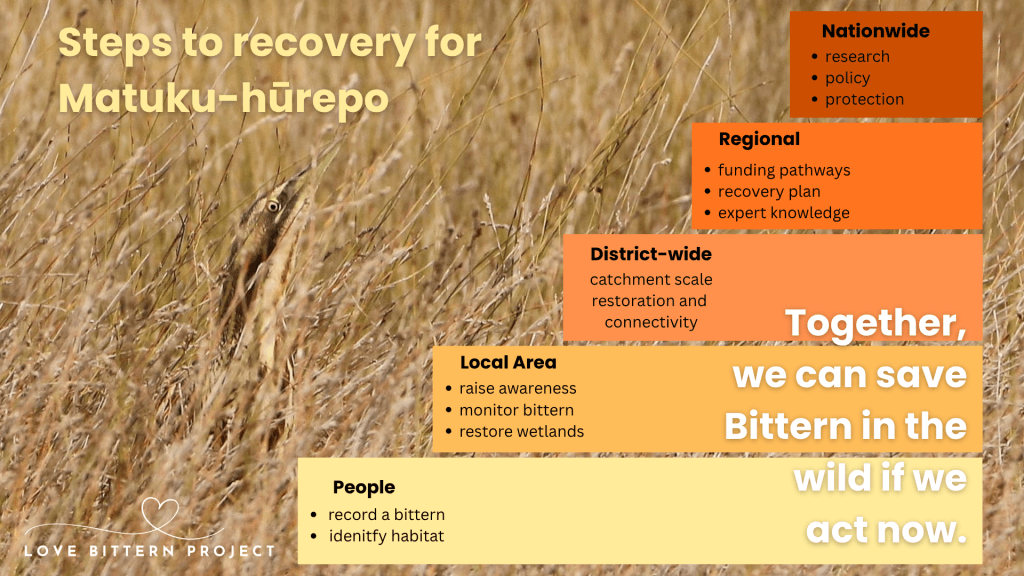
Together.
With upcoming talks and being unavailable to contribute this post tells you, through the lens of ‘The Love Bittern Project’ what is happening in Bittern Conservation in New Zealand.
Action on the ground is what matuku-hūrepo, our native bittern, needs right now.
We are committed to creating urgent coordinated action right around the country.
Here is our track record of lifetime love for bittern, that led to a small species-led project that started in 2020 and went nationwide in 2024 developing strategic initiatives to activate and feed the already hungry people wanting to learn more.
In 2 years we have delivered:
- 332- community events, workshops, hui, school visits and wetland walk and talks in all 16 regions of New Zealand to help raise awareness & advocacy as part of our ‘Connect to Protect’ program.
- 170 -habitat assessments and setting action on the ground to restore wetlands and freshwater habitats to meet the needs of bittern as part of our ‘Habitat for Hūrepo’ program.
- 905 – people have helped to listen for male bittern booming in ‘The Great Matuku-hūrepo Muster’ – the annual nationwide synchronised counts of male bittern booming that help to produce a population estimate and locate potential breeding grounds to focus protection.
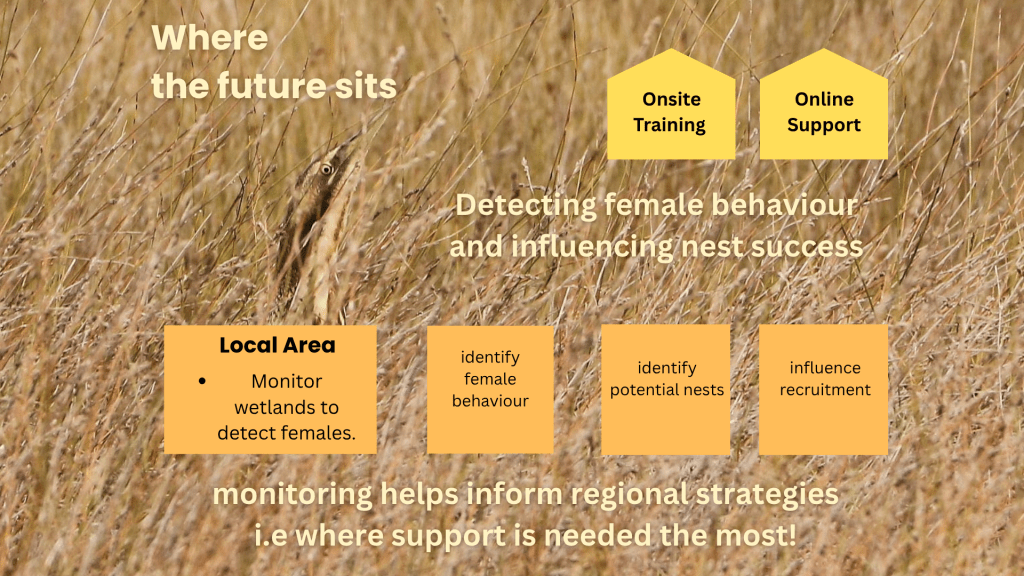
And waiting in the wings, ready for community groups who have wetlands with bittern booming consistently (as a sign of a potential breeding territory) is our 4th program- ‘Where the future sits’ which equips people to be able to detect female behavior and influence nest success.
We don’t operate alone.
Our ethos has always been one of gathering and sharing our collective knowledge, from people on the ground to DOC’s science advisors the information is constantly evolving.
Transparency is important – we’ve published our strategy and our results. We share information in our newsletters to help keep people informed and encourage more… more people, more wetlands, more action, more bittern.
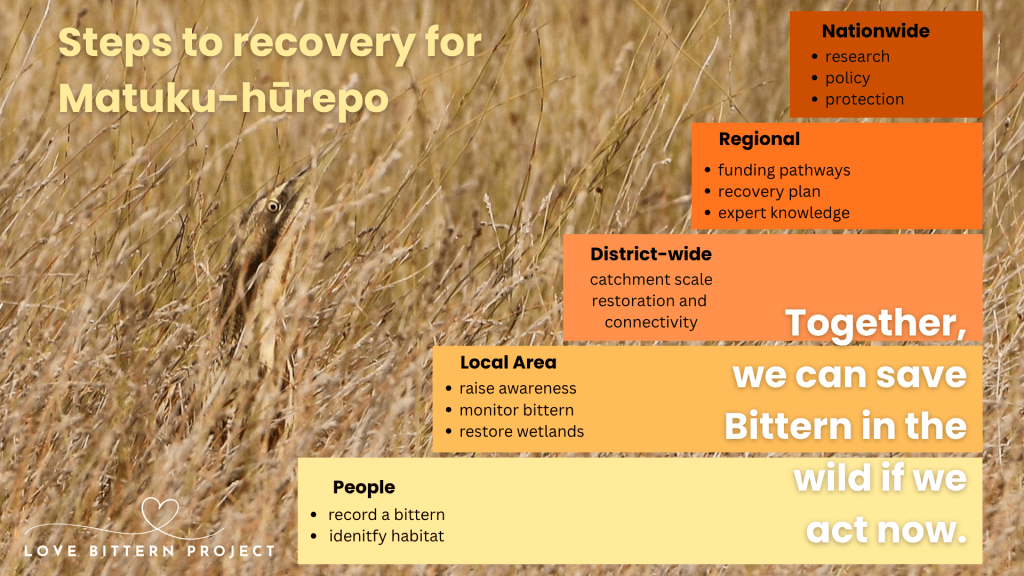
Here’s a walk through of how our programs come together to help with the steps to recovery for matuku-hūrepo, what we describe as the scaffolding to support people and places around New Zealand.
The foundation – Connect to protect
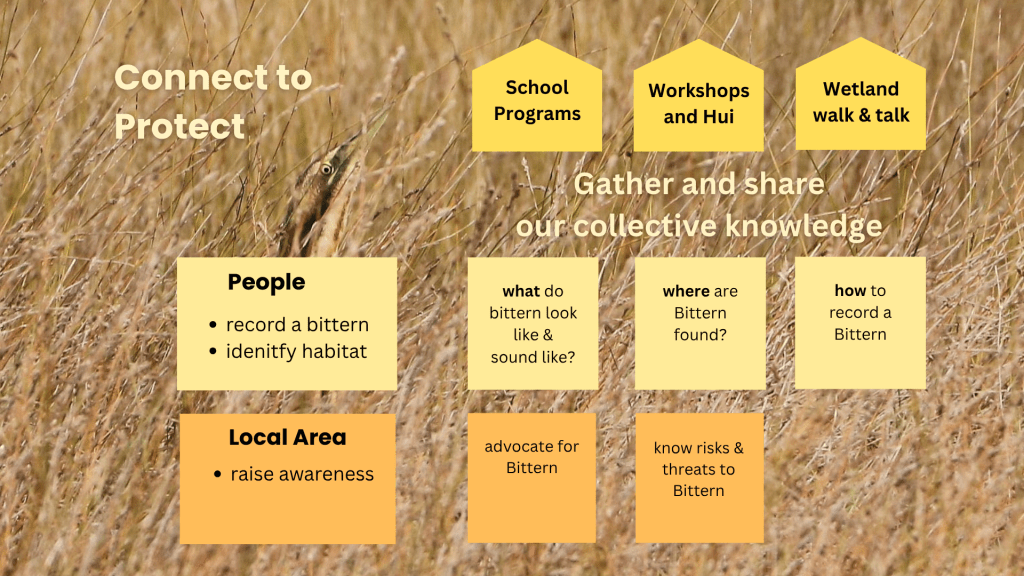
At an individual level, we are helping people to learn how to identify and record bittern and identify the network of habitats that they are using.
At a local level we are encouraging people to raise awareness, know the risks and threats that they face and advocate for bittern.
One of the easiest ways people can help is by learning how to identify and record a bittern every time they see or hear one.
- In 2023, before our nationwide program began there were ~400 bittern observations recorded around the country..(year ends 30th June)
- In 2024, after the first year of our national campaign there were ~600 bittern observations recorded
- In 2025, after the second year of our national campaign there were ~900 bittern observations recorded
- In 2026, we’ve had a landslide of over 2000 bittern observations recorded.
We are not the only voice helping bittern conservation in New Zealand, together we are all making a difference!
Focus & Engagement- The Great Matuku-hūrepo Muster
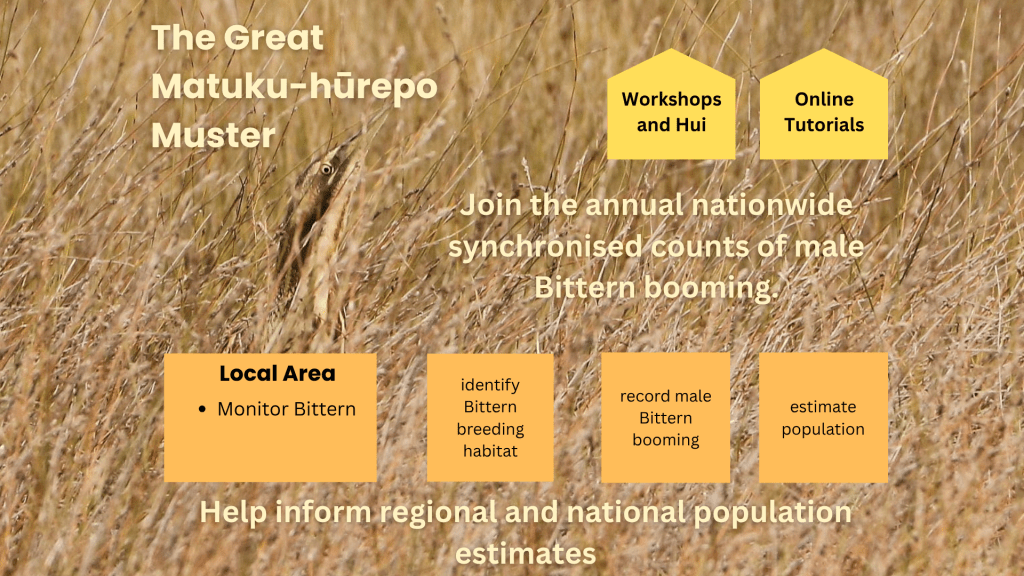
The Love Bittern Project initiated the muster which has helped to galvanise our communities, with over 1000 people registered and upwards of 500 sites covered and 200 individual male bittern recorded booming, this program creates the focus we need.
The number of male bittern is used as a population index, and is doubled to account for non-vocal adult bittern (males and females) to give us a population estimate.
These counts help us to get a better picture of what the nationwide estimate is.
The results also help us to locate possible breeding territories to focus our next steps ..restoring their wetland homes so there is enough water, food and vegetation to support them and protection.
“Our vision is to see increasing numbers of matuku-hūrepo, our native bittern across Aotearoa by 2035.“
Action on the ground- Habitat for hūrepo
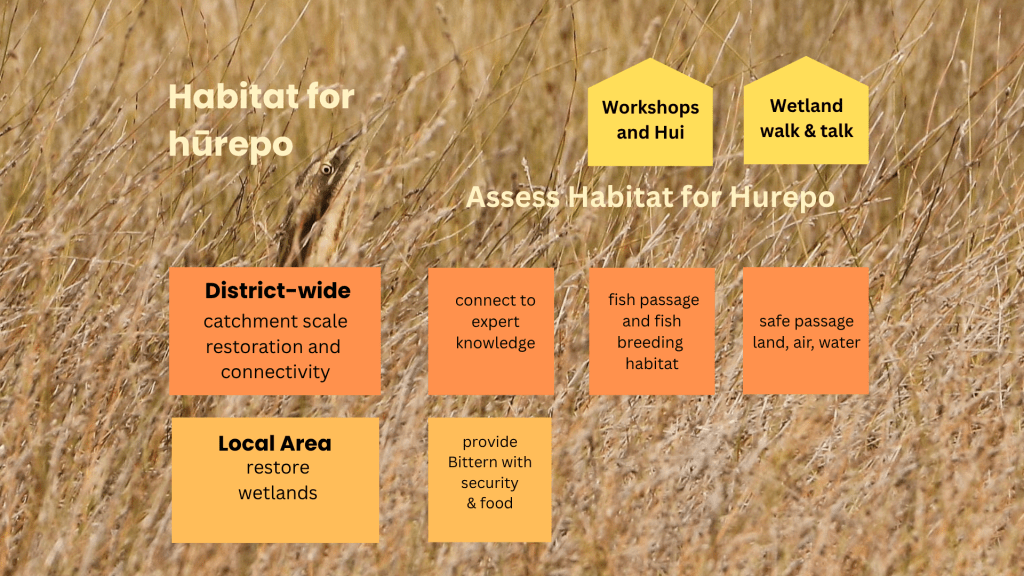
With over 170 wetlands assessed with bittern in mind and a wave of people getting their boots on the ground, actively protecting and restoring wetlands… or in some cases when there are no ‘ingredients’ left constructing wetlands, their fate may just be beginning to turn around.
The population of bittern, an apex predator of fresh (to brackish) water wetlands, is connected to wetland loss.
Wetland loss is not confined to the past, it continues, with less than 90% of our wetlands left, they are considered a threatened eco-system here in New Zealand.
The latest report from ELI for the period of 2018- 2023, has recorded 416 hectares of natural wetlands were lost. This has slowed from previous reports (5400ha of wetlands lost 1996-2018) and given that freshwater policies have improved (in 2020), we could be on our way towards a zero net loss for the next reporting period.
While habitat loss is a major contributor, fragmentation and degradation of the existing wetlands continues to handicap bittern.
Bittern need wetlands to stay wet. They need to be able to access small eels and fish in clear shallow water to hunt and to have enough cover, especially around deeper, more stable water, in emergent vegetation to nest and rest.
Just as importantly bittern and wetlands need to be protected from disturbance, by people (even the well meaning) and animals.
Sustainable guardianship – Where the future sits
We foster inter-generational guardianship, with our school programs published freely for use in environmental education.
However, we need to make sure we still have bittern for them to carry the torch.
Our 4th and final program addresses this by focusing on detecting females and influencing nest success.
This program builds on all of the others to help bittern persist, in the most cost effective and least intrusive way possible – people watching and listening from a vantage point.
..and this is where the final piece of scaffolding is erected, looking at the science that exists, working in with DOC and regional initiatives on a ‘whole’ scale.
Collaborating with agencies and organisations
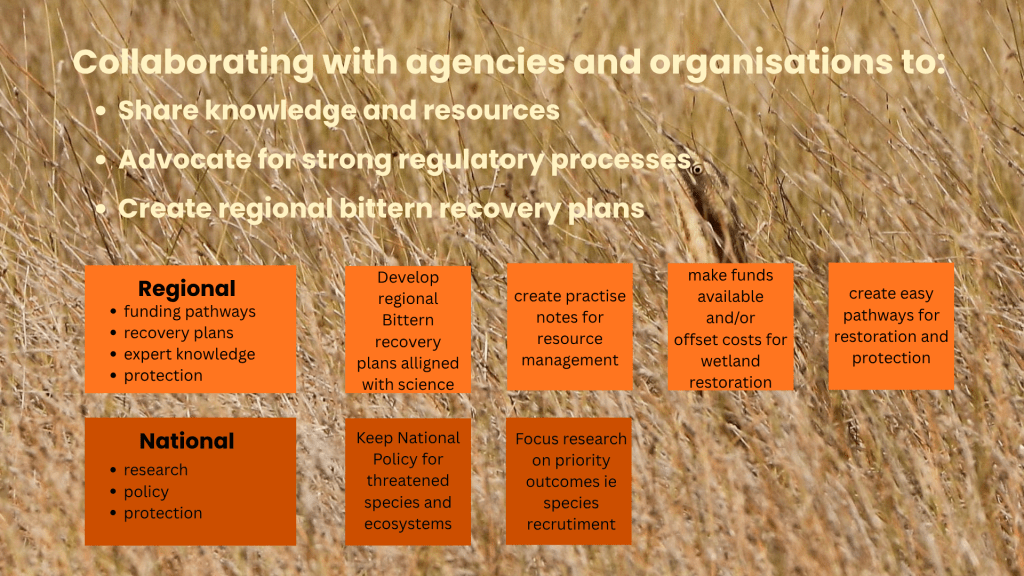
The final piece of scaffolding creates a platform with agencies and organisations to
- share knowledge and resources
- advocate for strong regulatory processes
- create regional bittern recovery plans based on the science that exists.
With 9 out of 16 regional agencies in New Zealand already on this journey, we’ve found amazing support for bittern in the board rooms.
This support is translating to helping to plan and resource action on the ground, supporting our programs and the people and places within their region that are putting their hands up to help hūrepo.
Department of Conservation
With little known about females and recruitment of chicks to adulthood our hard working agencies (DOC, regional councils) are priortising their support on the innovation and technology that will help us to fill this data gap.
Technology is leading us forward with less intrusive methods to gather data, replacing those we know create disturbance, like cameras on nests and frequent visits into wetlands to change SD cards/batteries where bittern are breeding or feeding.
Together, if we act now, we can save bittern and their natural wetland homes!

