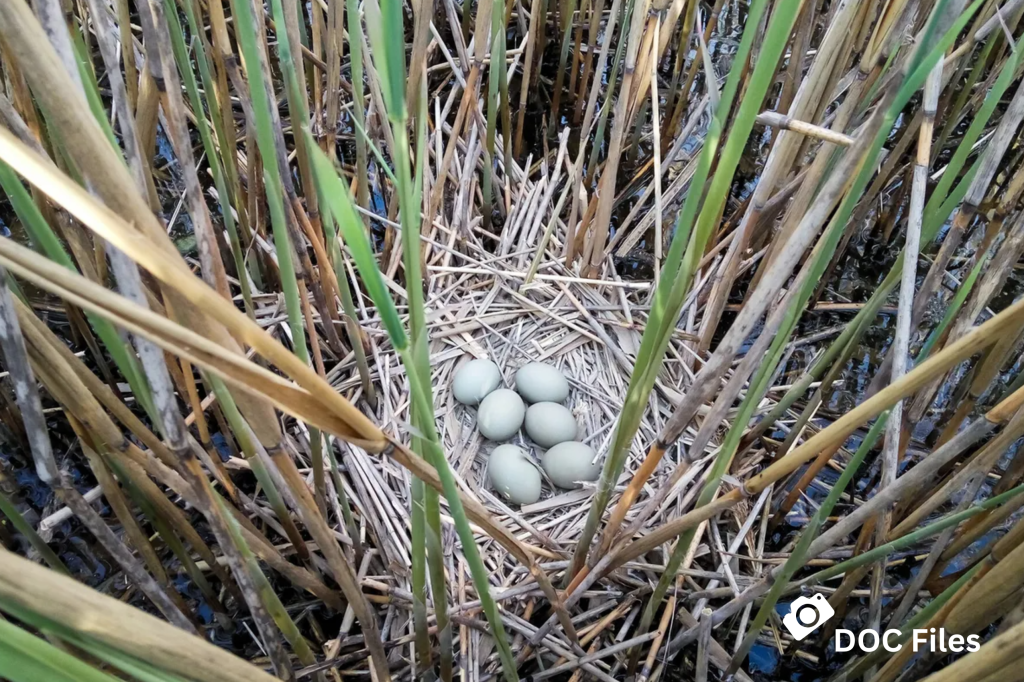
Monitoring female behaviour & influencing nest success.
While the estimated number of individual males booming is important as a population index, what is also important is identifying and supporting females to achieve nest success because that’s where the future sits.
We have low recruitment rates (chicks reaching adulthood) for bittern in New Zealand and this, our fourth and final program – ‘Where the future sits!’ -addresses this crucial gap.
How you can help
Our program helps people to identify and record female nesting behaviour, to help identify individuals using trail cameras, qualify nesting sites for potential further investigation and to provide further support to influence nest success.
If you have wetlands/ a wetland project that meets the following criteria we would love to hear from you-
- evidence of male bittern booming and site occupancy (results from boom monitoring will provide this evidence).
- a wetland that is able to be viewed passively without disturbing Bittern movements from a hide or a vantage point.

- a team of people who are able to commit to time to watch (5hrs at least once every 10 days) and record their results for the duration of the breeding and chick raising period (from approximately mid August to mid March – or pulse when results consistently show no results for 20 days or more)
- the ability and resources to place game camera’s at the edge of your wetland area on foraging lanes and capacity to review results.
- the capacity and capability to provide extra support/take action (see below) when females or nests are detected.
Full training is provided.
You will also be provided with a field sheet to record your observations and little else other than a clipboard, pen/pencil, binoculars, a good attention span and enough sustenance to get you through 5-hrs from pre-dawn is required!
How can we help influence nest success
The female looks after the nest and raises the chicks on her own. This makes the female (who is already smaller than the male and less able to defend herself) more vulnerable.
While the female is away from the nest getting food, her eggs and chicks are also more open to predation.
By supporting the female to reduce the time she is away from the nest and stopping predators from getting to her nesting area we may be able to positively influence nest success.
‘Support’ could include a combination of
- ensuring fish or a source of food is abundant and as close to the nest as possible.
- monitoring foraging lanes or platforms to detect individual bittern, identify gender and age.
- monitoring and controlling pest invasions without causing any disturbance during the time a female is nesting or raising her young.
- fine tuning your predator control,.
Please contact us if you have any questions or are interested in participating in this vital work.

