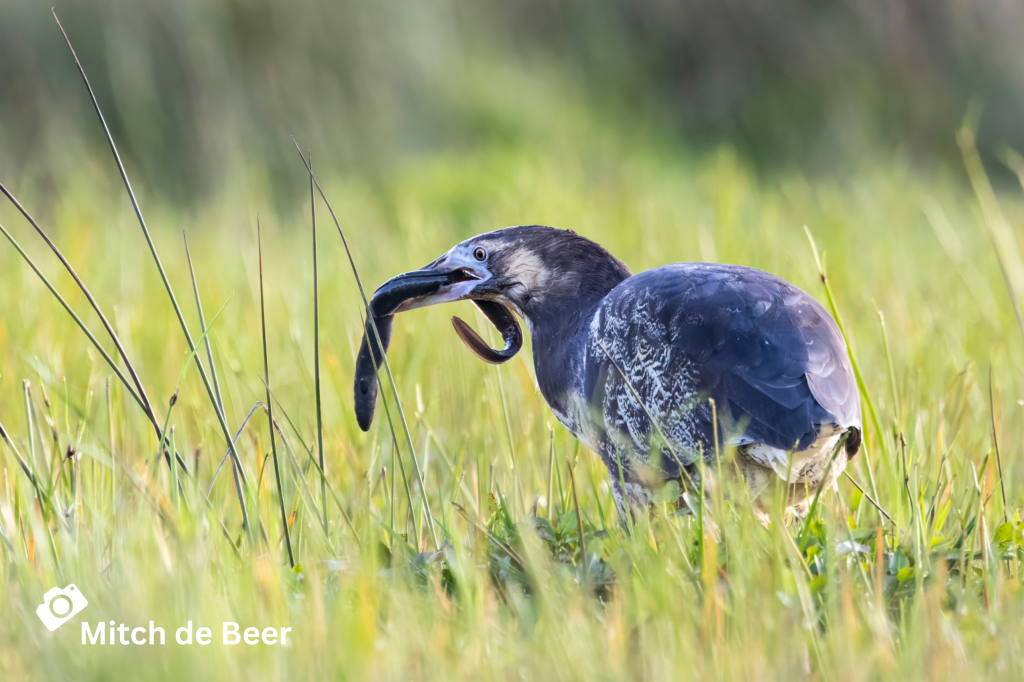
Do you have enough eels and fish in your wetland?
Bittern are BIG birds, standing on average as tall as a dining room table (~74cm) and weighing in at over 1kg (females lighter, males heavier) bittern need a lot of food to sustain themselves.
A sad reality is that bittern are starving.
The search for food ramps up in the spring when they need to feed up to get into breeding condition.
Stories shared with us talk about matuku-hūrepo flocking to the coast ahead of the main whitebait run, ready to feed up on the small native fish swept by the ocean currents into our rivers and follow them inland as they move upstream.
Bittern follow their food to inland wetlands connected through a network of waterways and waterbodies.
Their favourite food (we think) are eels and our native fish; species that bittern have been connected to since their arrival in Aotearoa.
You can find these helpful checks in our ‘Habitat for hūrepo’ assessment guide here
Check
- Does your wetland have an abundance of small eels and native fish?
- Are your fish mostly native species?
- Do you have everything your fish need in your wetland for a diversity of species to thrive?
How do I do this?
The easiest way is to contact your local council, landcare or conservation group to see if they can help you to carry out a fish survey. We recommend you use gee minnow traps as we only want to find out what small eels and fish we have (the size a bittern can eat!)
Record
- the species of fish you have got.
- how many of each species
- their size ( length).
Research
- What do the fish need to eat?
- Do they travel out to sea or another location to breed or mature?
- What depth of water do they prefer?
- What vegetation do they need?
- What temperature does the water need to be before they breed(if applicable, some fish wait til the water is warm to spawn)?
Act and remeasure to record your results!
- Restore your wetland habitat to provide for fish
- Connect your wetland with waterways, waterbodies and other habitats fish need to complete their life cycle.
Everything is connected, by looking after their kai/food we can help bittern to thrive!
Did you miss the first step? – 1.Start with the wai.
Without water we cant have an abundance of fish…and if the water isn’t shallow and clear for a bittern to walk in and see their prey they go hungry.
Deeper more stable water with emergent vegetation that provides the ideal location for bittern to nest and rest doubles as habitat for a diversity of tūna and fish.

