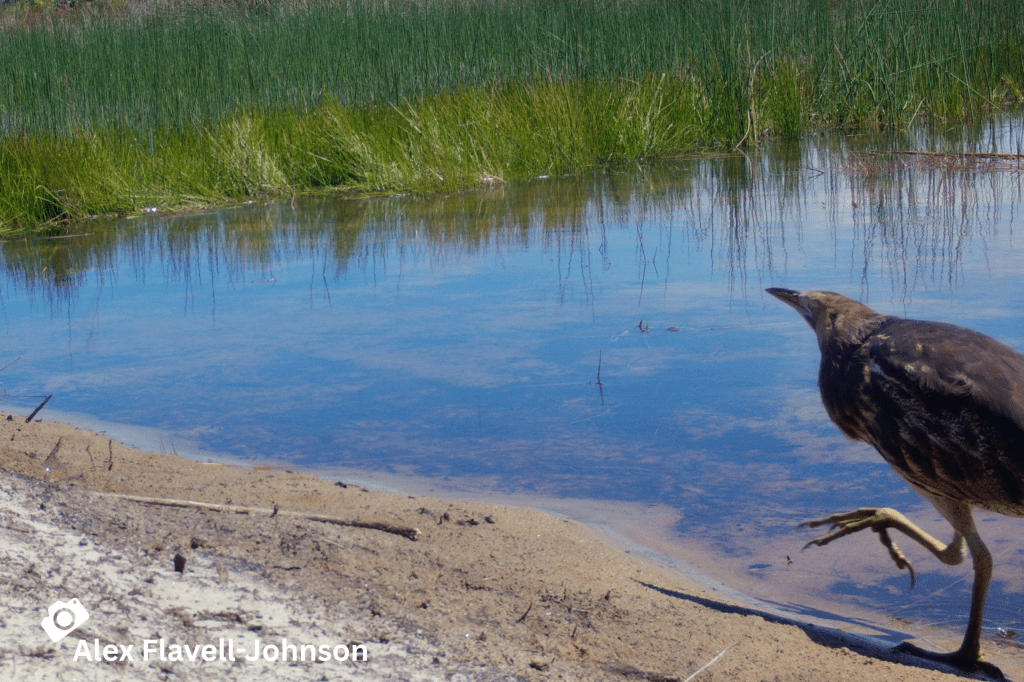
Help protect bittern and their wetland homes.
Give bittern a voice. Record them every time you see or hear one.
The numbers are in for the year (ended 30th June) with over 2200 total observations .. made up of a landslide of 1500+ observations recorded as part of The Love Bittern Project … and records are up on eBird (550 observations) and iNaturalist (93 observations) too!

We collate these records as a measure of how we are going to help raise awareness and advocate for bittern – one of our goals is to help people to identify and record bittern.
And more importantly we record bittern to help protect them.
We work with people right across the country who have been devastated by land use changes… things like roads, windfarms, solar-farms or water extraction that have altered their livelihoods or taken away, in some cases, intergenerational land & homes.
Yes they are compensated, but it never replaces the true cost.
Bittern feel these changes too. Wetlands are often targeted as flat ‘unproductive land’ to be used for infrastructure projects. With less than 10% of our wetlands left as nation, every wetland counts.
It was fantastic to see the slowing of wetland loss in the recent ELI report for 2018-2023. The next 5 year report will be the one that shows us how well we are doing in turning the fate of our wetlands – a threatened eco-system here in New Zealand – around.
Bittern need a network of fresh-brackish water habitats – wetlands, waterways & waterbodies to support them.
We need wetlands to help keep our water drinkable, swimmable and fishable.
Recent reports from Stats NZ highlight significant pressures on New Zealand’s waterways. Key findings reveal that 63% of monitored lakes are in poor health, nearly half of the river network is unsafe for swimming, and 45% of groundwater sites exceed drinking water guidelines for E. coli.
We are all in this together, everything is connected.
What are you doing to protect our freshwater and wetland species for future generations?
 LOVE BITTERN PROJECT