People listening at wetlands to record the male bittern booming.
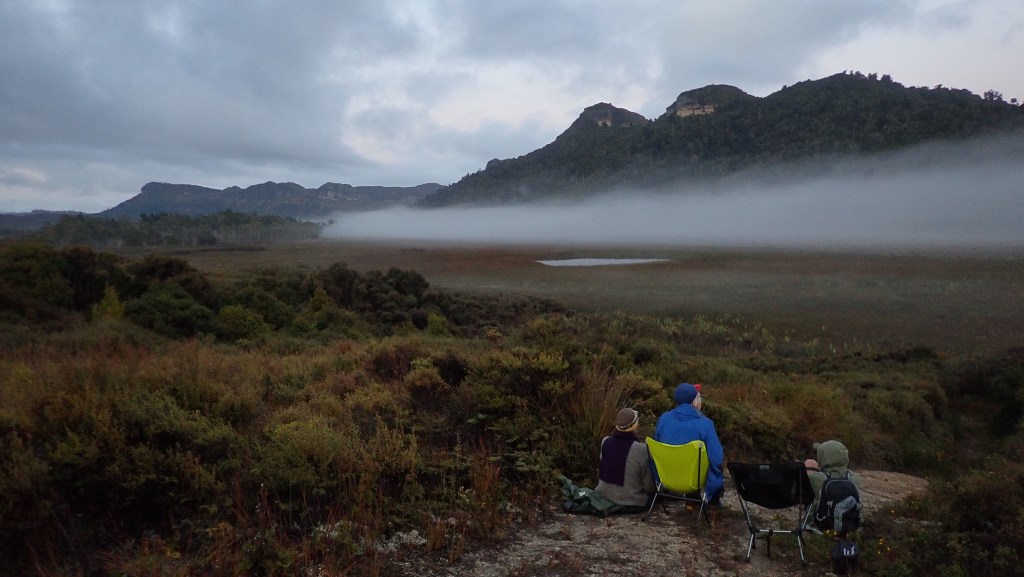
Active Listening or triangulation
Once you have established the presence of bittern the best way to get a baseline population estimate is to listen, or get a team of people to listen at your wetland for the boom of the male bittern and record their position.
This is the monitoring method used for our annual nationwide counts in The Great Mautku-hūrepo Muster.
This method involves spreading your team out around your wetland when male bittern are most likely to be heard during peak booming.
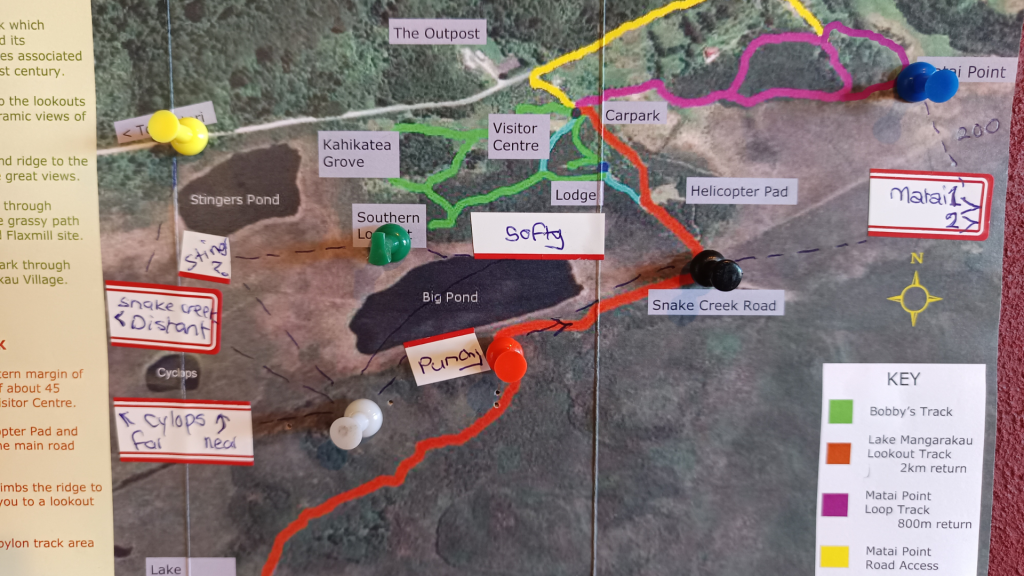
This peak booming occurs during the Spring, pre-sunrise or post-sunset.
We follow the DOC Monitoring Protocol here and have produced a community workbook guide to active monitoring to help you.
You can use a manual paper based from to record your survey results or record your results directly in The Conservation Hub app.
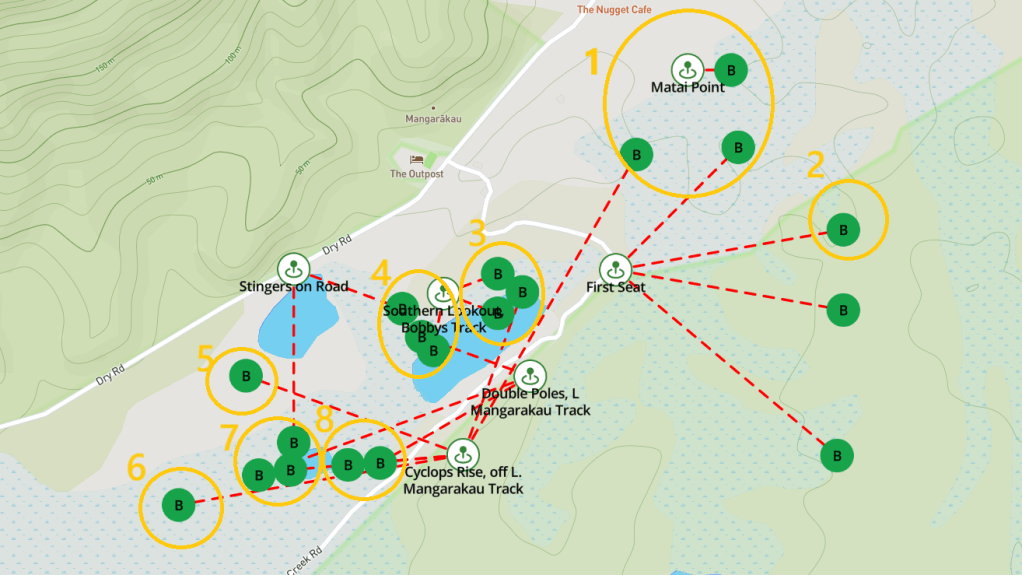
If you are using manual paper based records you can still enter your results into The Conservation Hub app to triangulate the position of each bittern to help estimate the number of individual males in your wetland complex.
If you are participating in the muster please let us know how many people listened, how many stations (places) they listened from and how many individual bittern were heard.
Contact us if you need help to train your team to carry out active listening or take part in the muster.
 LOVE BITTERN PROJECT