Program and resources for schools and educators.
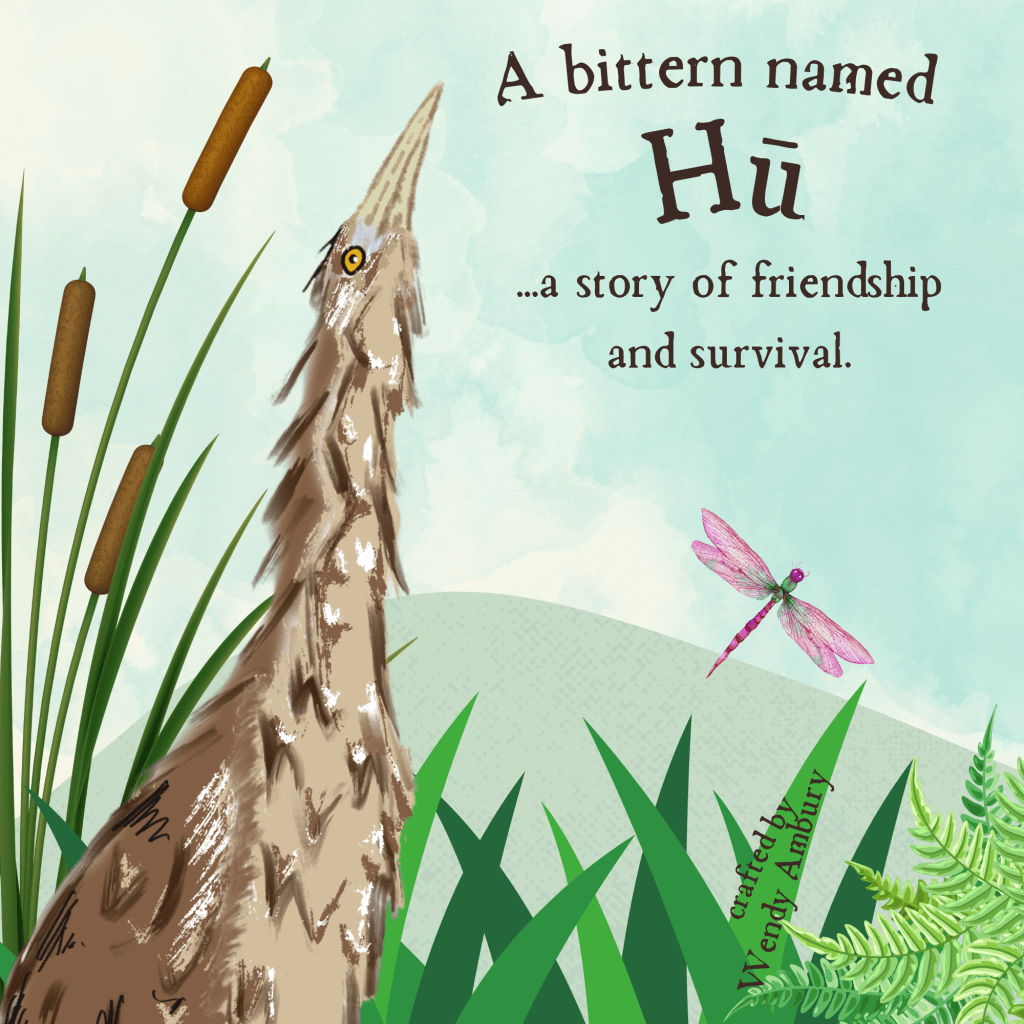
The program pivots around the story of “A Bittern named Hū”.
Contact us to request access into the shared google file which contains all of the resources we mention here!
Learning Outcomes – learners will be able to
- Recall basic facts about bittern, where they live, what they eat, what challenges they face.
- Recognise and record the boom of a male bittern
- Recognise features in the wetland that Bittern need to thrive.
Program Delivery
We would like to make the program available without barriers to as many schools and educators as possible. To this end we freely provide access to our shared resources and offer free online training to educators.
In some cases, organisations are supporting us to provide training in-person or deliver the program in schools by funding us. The cost to deliver is $300 a day.
Here is a letter of endorsement for our program and delivery.
The typical program below can be delivered in 45mins to 1hr to a single class and when we deliver it, it is modified, rather dynamically to suit the knowledge and energy of the children.
A typical program
1. Collect the knowledge from the room -we start for all levels collecting the knowledge in the class of wetlands and Bittern.
- What is a Bittern?
- What do they look like?
- What do they sound like?
- What do they eat?
- Where do they live?
- How many Bittern do we have in New Zealand?
- How BIG is a Bittern?
- Have you seen a Bittern?
- What is a wetland?
- What do we find in a wetland?
This enquiry is supported by pin up pictures, so when a feature (animal, plant, substance (eg.mud) ) is mentioned the card gets placed on a board and begins to create the food-web.
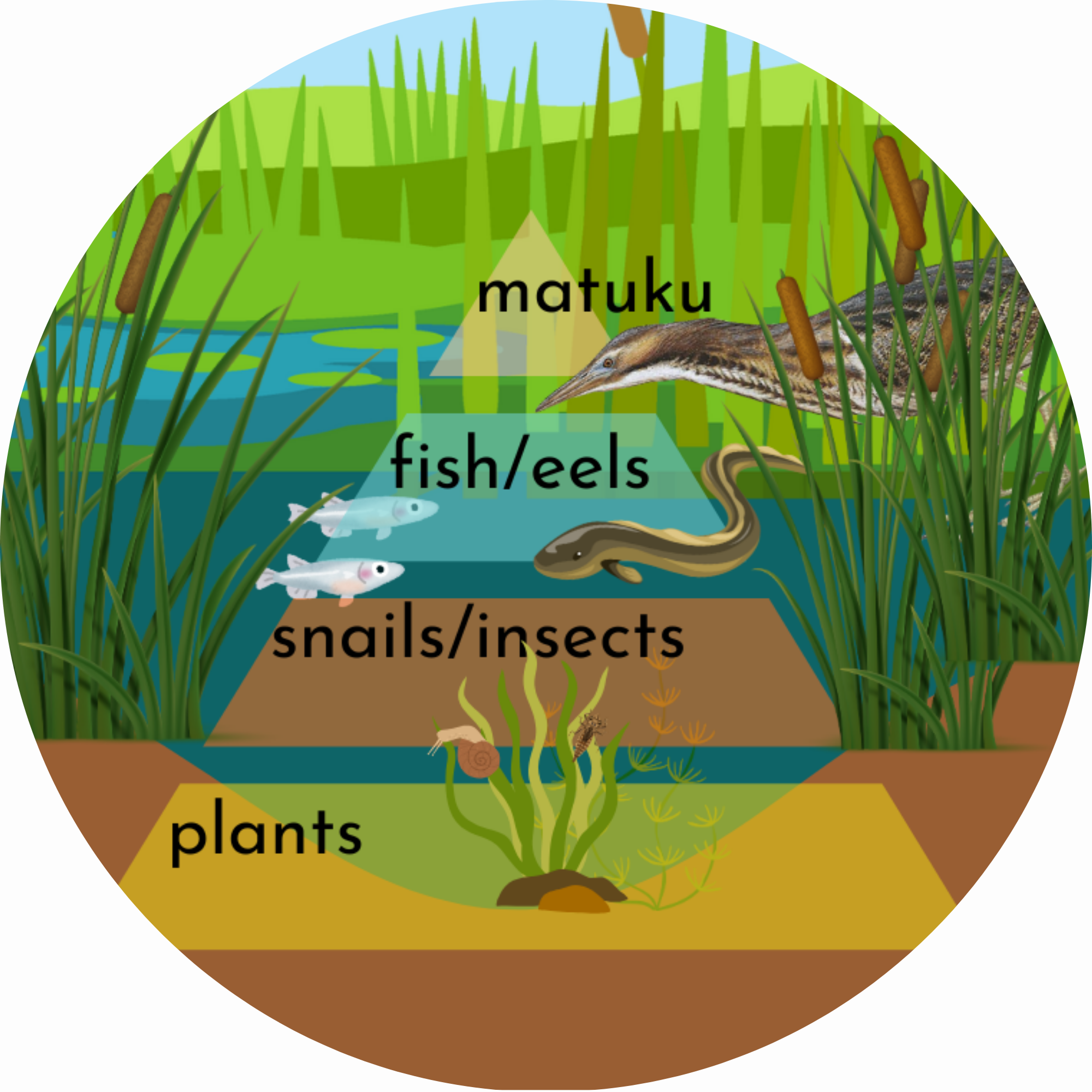
TIP I often draw a triangle on the whiteboard and a water line and place the cards roughly where they belong.
2.Fill in knowledge gaps
To fill in the gaps we either read the story of “A Bittern named Hū” and then re-look at our food web on our board – what else did we learn from the story? ask questions to draw out the missing components. eg-
- What did Herbert get excited by?
- Who was Keely the kahu trying to catch?
- What was the female bittern interested in?
- What had Sally done to restore her wetland?
- Why was Sally excited about seeing a Bittern?
..or for independent learners break them up into groups to go and research the topics
- Food – what they eat, how they catch their food
- Family – lifecycle
- Security – threats and risks
- Monitoring – how do we detect and record Bittern
You can let them watch the Darwin 200 videos to support their learning or research facts online.
An interesting version of this is to have at least two groups for each topic, let one search the internet and give the other reputable sources for research – note the difference in results!
Invite these independent learners to create a poster, a short skit or song that they present back to their peers on their topic.
3. How to recognise and record a Bittern booming
- Watch the video of a male bittern booming
- Can you imitate the BOOM?
- Watch the video again and count how many BOOMs the Bittern makes in this sequence
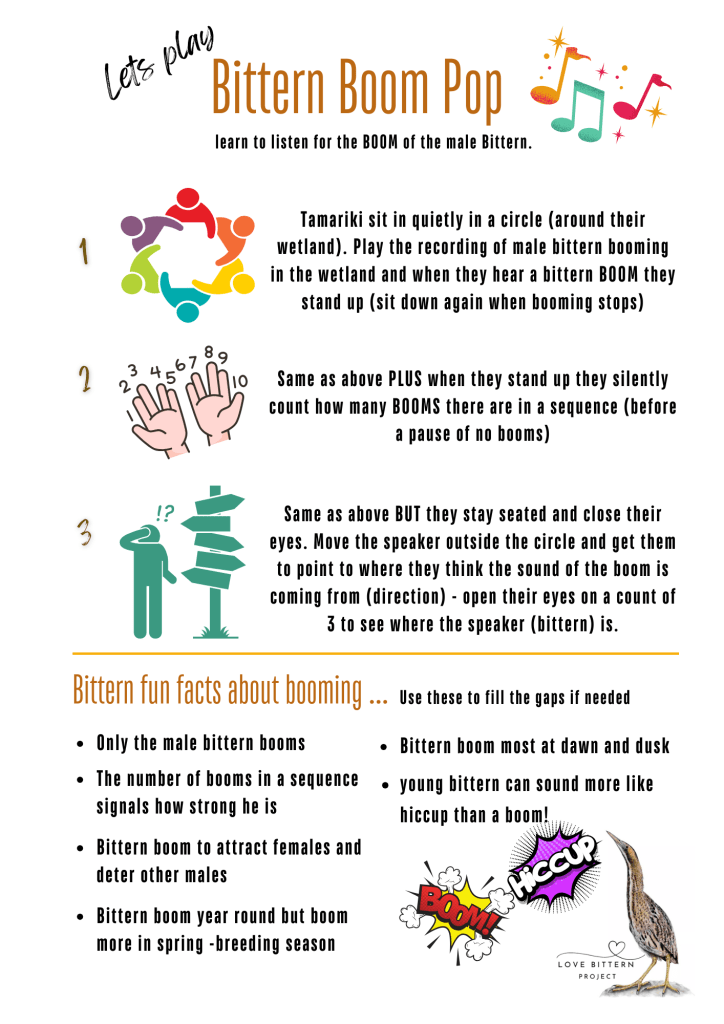
Play the game Bittern BOOM Pop! listening to a real recording of a New Zealand wetland …what else can you hear? Weave in the facts about booming…
4. Wetland DIY Enquiry
Set up the DIY enquiry stations –
- 2 x buckets with fish drawn in the bottom, one clear the other murky water (too turbid to see the fish), one more than 25cm deep the other between 15-25cm deep ..and rulers.
- 2 x paint trays or pans on a lean with a sponge across it, a bottle of clear water and a bottle of murky/muddy water. A measuring jug, a clear jar to view the water and a timer (or count off).
Enquiry: Bittern are visual hunters, they need to see their food in clear, shallow (15-25cm of) water to catch it.
Bucket Stations:
- how many fish can you see in the water?
- How deep is the water?
- could a Bittern feed in this water?
- why/why not?
Enquiry: If a wetland is too dry it doesnt have eels, fish or frogs for Bittern. Wetlands slow the flow of water, soaking up the water like a sponge and creating pools which provide aquatic and semi-aquatic animals a place to live. Wetland plants also help to filter the water making it clean/clear so Bittern can hunt.
Tray stations:
- how long does it take for 100ml of water to run from the top of the tray to the bottom without a wetland(sponge)?
- How long does it take with the wetland(sponge)?
- How much water is left at the bottom?
- What happens to the water?
- Compare the murky water you started with with the water that has gone through the wetland sponge – what is the difference?
- How do wetlands help Bittern to find food?
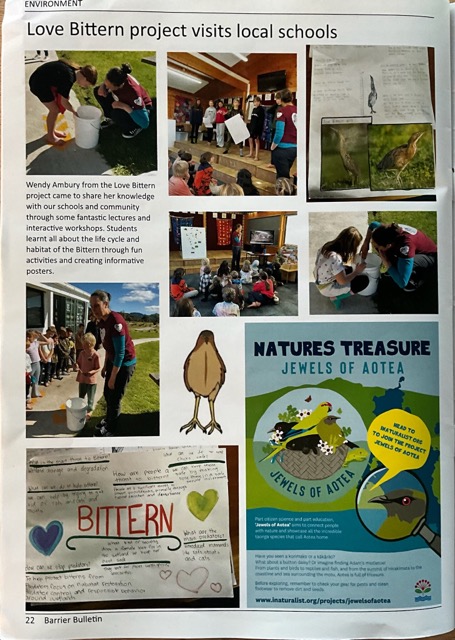
Article published after helping to deliver programs in schools on Aotea | Great Barrier Island
Additional resources
The Love Bittern Project has created (and is still adding to) a range of resources that we can give you access to in a google drive there are:
- more games that can be played outside like Bittern Bullrush, Bittern and mouse, Bittern musical chairs
- inside activities word finds, activity sheets, board game, templates for mural and colouring in.
- song – Spotify link to Matuku Matuku by Followers
https://open.spotify.com/track/5h5d9rqOUWypEcrjSlTdhJ?si=2258720a49164bfa
and some additional resources from Matuku Link can be found here.
If you have resources we can add we would love to include these as well!
Extension – Wetland Field Trip
- are their places for a Bittern to hide?
- is the water clear and shallow so a bittern could feed?
- can we see small fish, eels or frogs in the water ( ..or placing a fish trap out if you have the resources/permissions to do so and identifying what fish are caught)
- can we see footprints in the mud and who do they belong to?
- what can we see that people have done to help the wetland and/or Bittern?
 LOVE BITTERN PROJECT