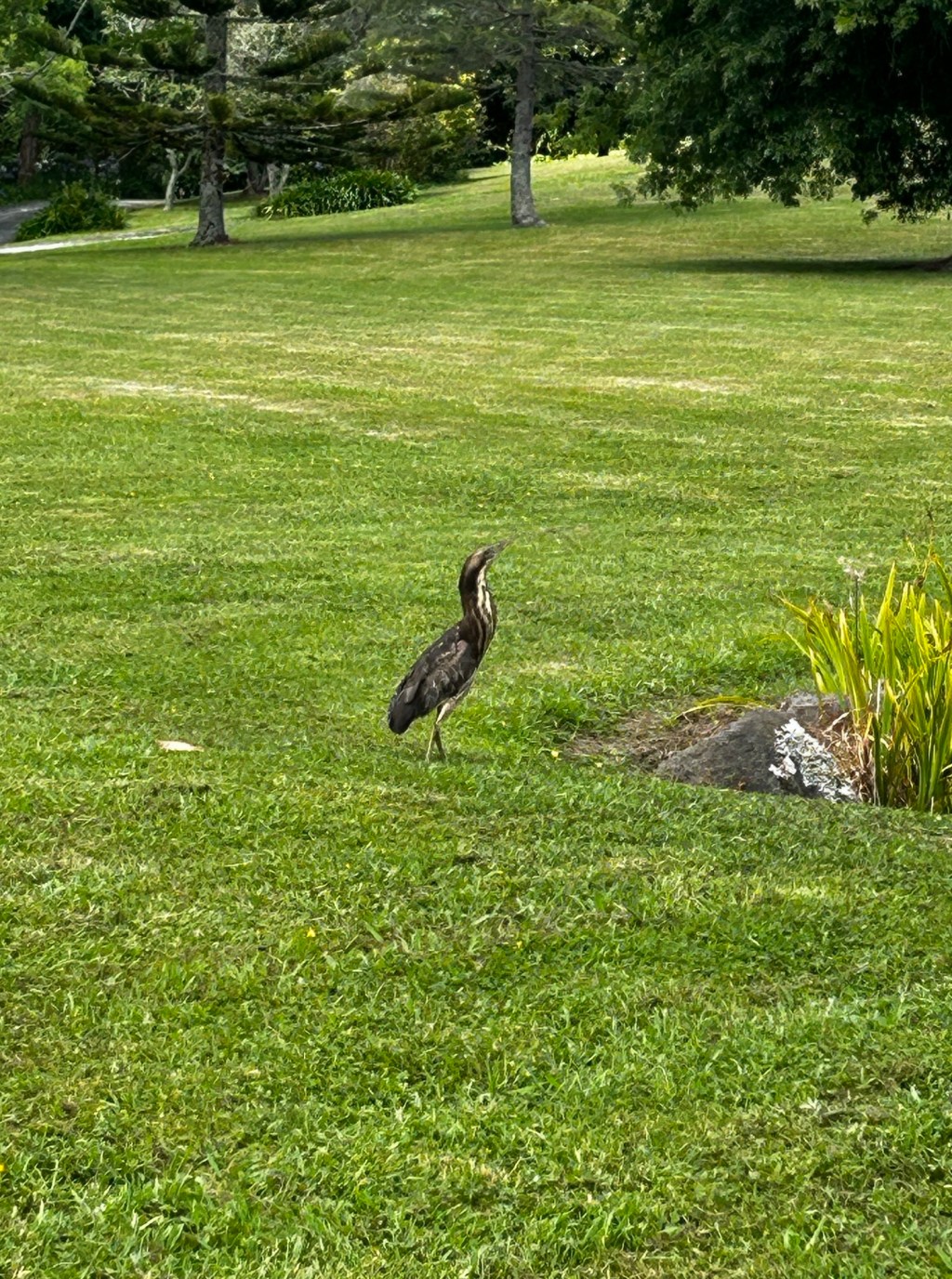
To see a Matuku-hūrepo, our native Bittern is extremely rare, especially a female.

Article:
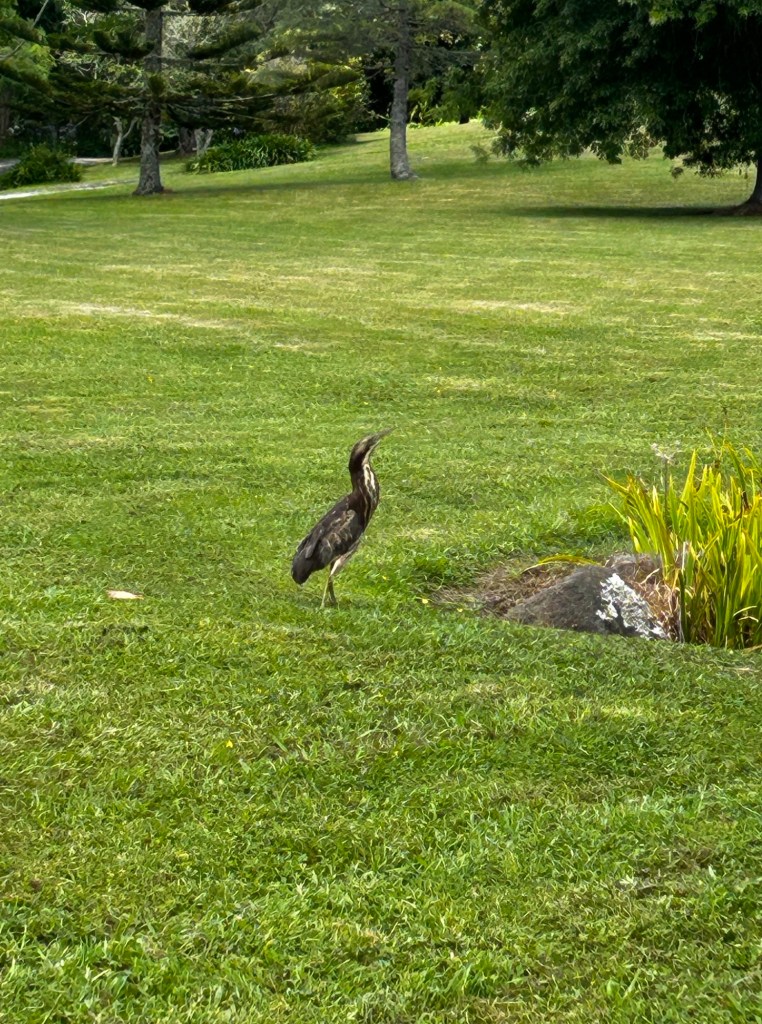
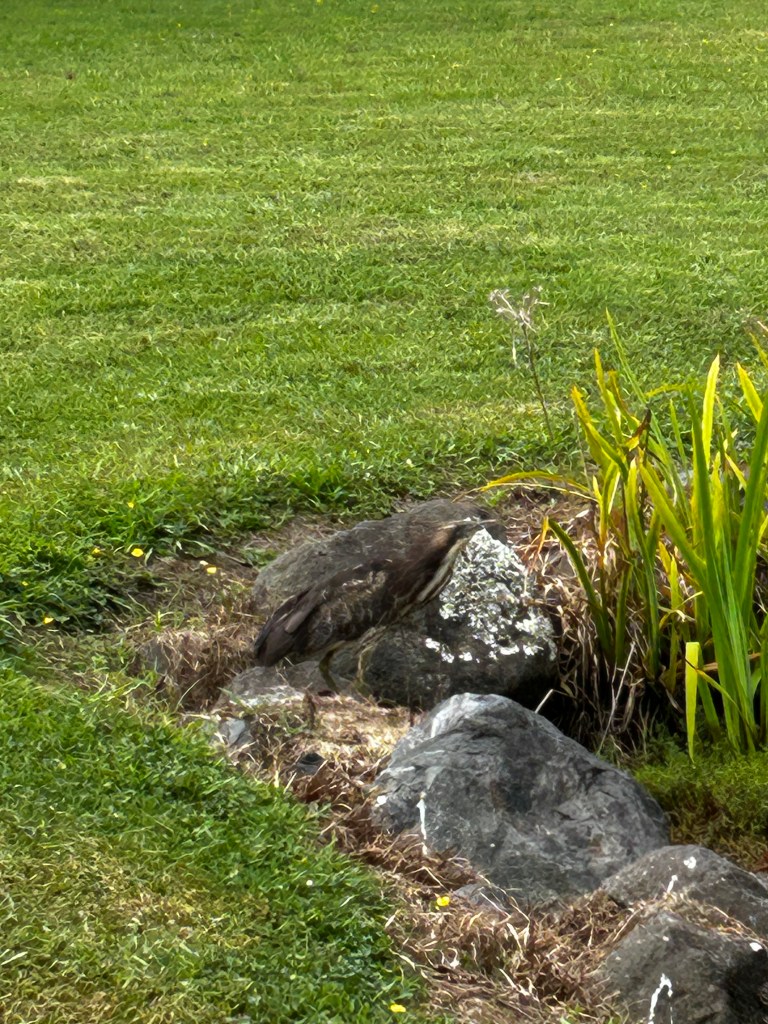
Steve Loughlin had a close encounter with a Bittern on his property on Tongue Farm Road near Matakana and reported
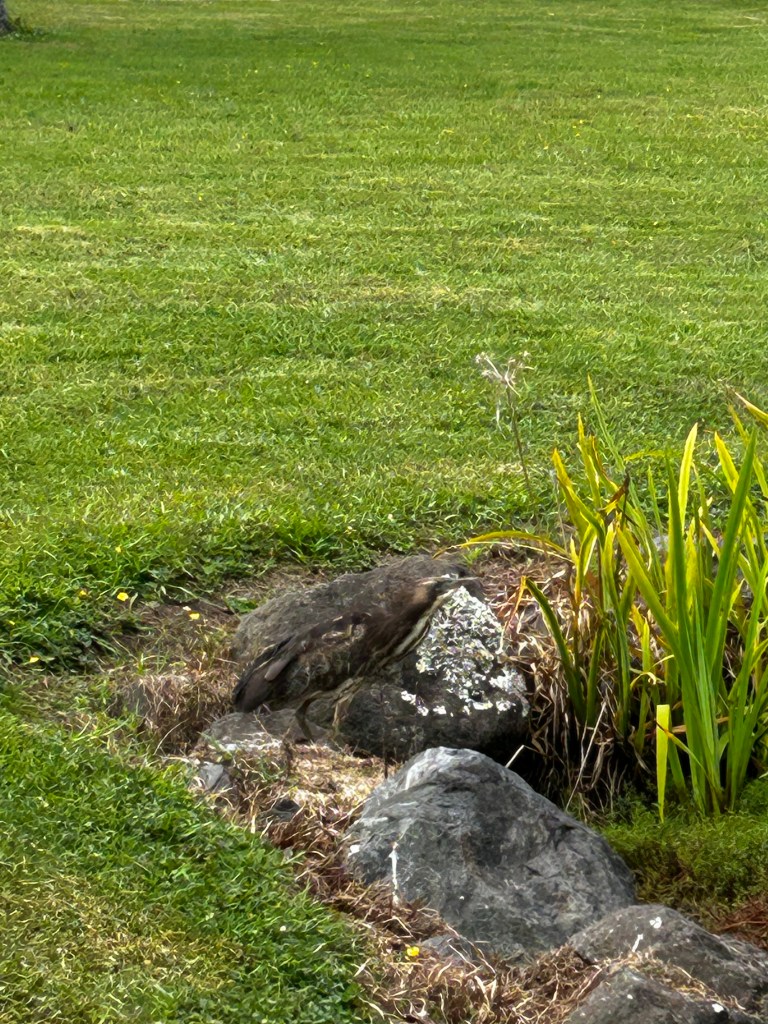
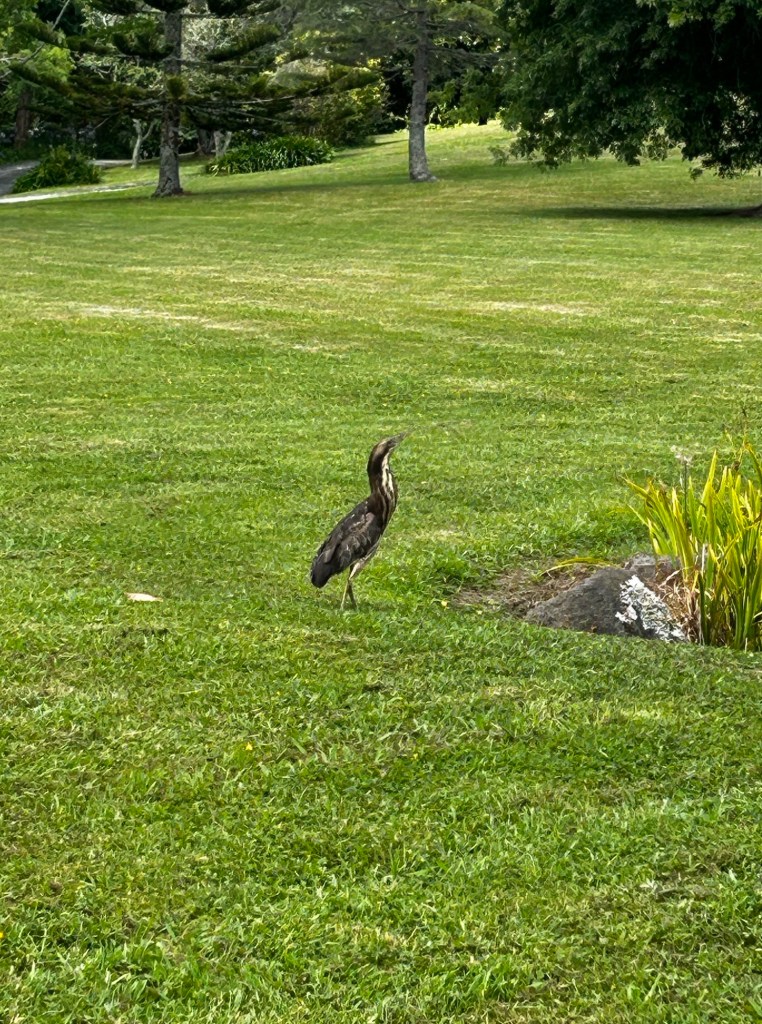
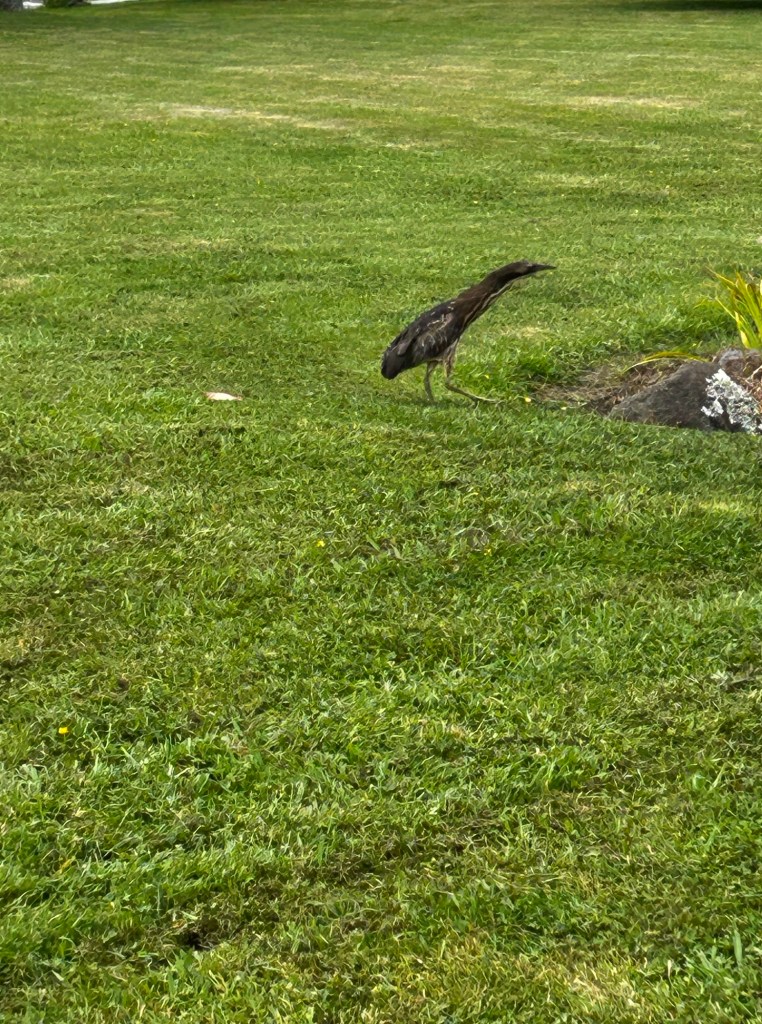
“It was a surprising encounter as I was on a ride-on mower. It swooped over me from behind, landed in front of me before freezing and then walking into our pond. I turned the mower off and let it forage alone.”
Not knowing what it was he took photos and used these to identify it as the Australasian Bittern and recorded the sighting with the nationwide Bittern Conservation group the Love Bittern Project. Wendy Ambury National Coordinator for the Love Bittern Project was excited by the find after asking for photos and a bit more information she responded
“Wow! That’s an adult female, her intense focus on foraging is a sign she is likely to be nesting near there. That’s a really significant find, females are very rare, males out number them around 3 to 1!”
Wendy looked for wetland habitat nearby using online maps and identified two significant wetland areas either side of Tongue Farm probable breeding locations. She then found out about a proposal to fast track the development of Tongue Farm into a retirement village. The plans were reported to include reinstating or restoring wetlands on the farm to off-set the impact of increased development in the area and raised her concern.
“It’s not what we do, it’s how we do it that matters. We’ve seen projects with good intentions who completely miss the mark when it comes to restoring wetlands for Bittern”
Wendy explained “Bittern are a top predator in our fresh to brackish water wetlands, we need to aim to meet their specific needs, because when we do we keep the entire food chain intact and help all of the other wetland dependent species and the wetlands themselves to thrive”
At the same time a second record of a Bittern came in from Tracy Kirkcaldy, she had spent the morning enjoying a stroll on the Matakana cycleway and was at the end of Tongue Farm Road when she saw a Bittern.
“I observed a large, stocky bird—unlike any I had previously seen in New Zealand—rise out of the wetlands and fly across the cycleway and realised it was a critically endangered Australasian bittern. It was a truly rare and wonderful sight to see this bird unexpectedly, and a powerful reminder of the importance of protecting environments where they can live”
With less than 1000 adult Bittern left in New Zealand they are classified as at a high and immediate risk of extinction. The underlying cause is wetland loss and degradation. Wendy says “We’ve lost more than 90% of our freshwater wetlands nationwide, this loss is not confined to the past– we continue to lose wetlands and wetland dependent species like Bittern are disappearing too.”
But it’s not all doom and gloom. Wendy believes by coordinating community groups nationwide to take immediate action on the ground, to learn how to identify, record and protect Bittern and restore their wetland homes, that we will save them.
“At the current rate of population decline, we are the last generation of people who can save Bittern in their natural wetland homes.”
Local community group The Forest Bridge Trust are a great example of coordinated action. The team there were quick to work with local conservation group Takatu Landcare to deploy automatic recording devices to see if a male Bittern could be heard nearby.
Male Bittern make a deep, hollow ‘whoom’ sound, similar to the noise you make when you blow over the top of a glass bottle, in a short sequence of calls known as booms.
During the spring the male Bittern booms, we think, to attract or protect females and deter other males. These booms can be heard over 1km and up to 5kms away in perfect conditions, which help us to identify where possible breeding locations are.
In the Spring we had teams of people out through Mahurangi, from Mahurangi East through to Omaha take part in ‘The Great Matuku Muster’ – annual nationwide counts of male bittern booming, they counted just 3 males in the area which equates to around 6 Bittern in total.
The Forest Bridge Trust supports local community groups and landowners in the area to increase biodiversity by providing the knowledge and skills to help them control plant and animal pest species and carry out habitat restoration.
You can also help by recording a Bittern every time you see or hear one on http://www.lovebittern.com , every Bittern and every wetland counts!
 LOVE BITTERN PROJECT